
MATRIX BLACKBOX / ARCHIVE
Software and hardware have different limits.
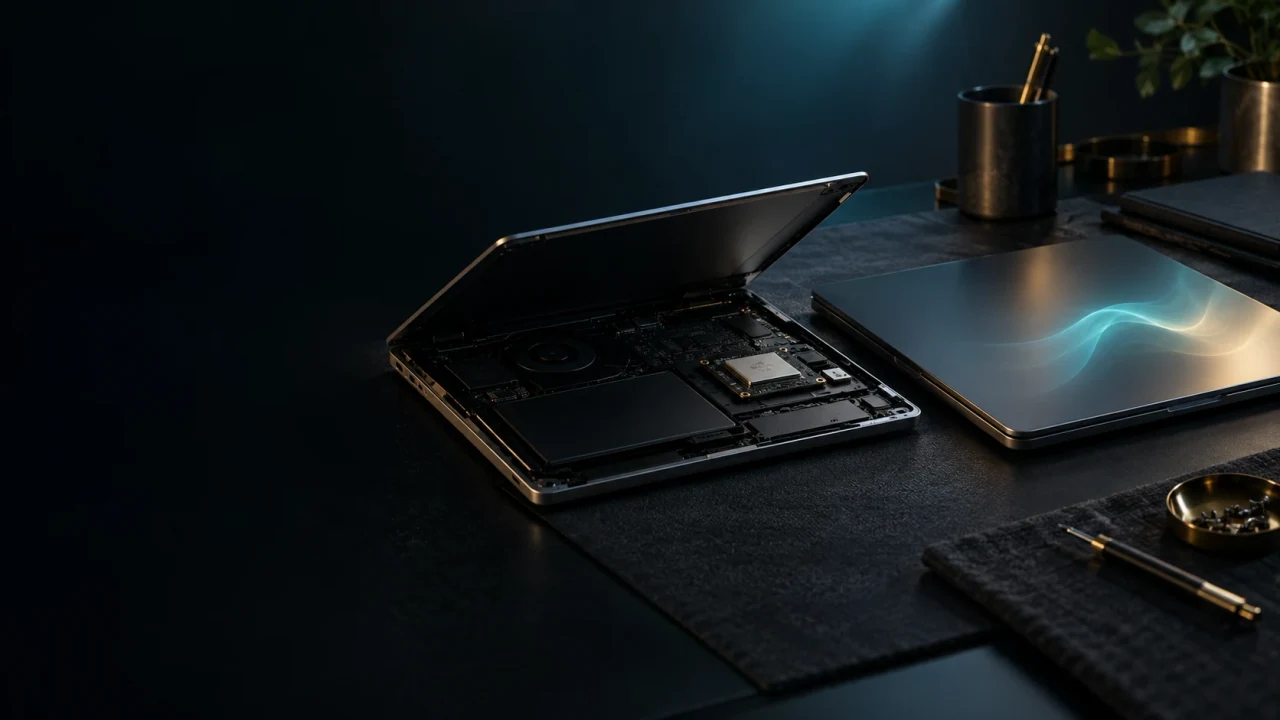
A 2018 Matrix Blackbox comparison of software and independent hardware as two approaches to laptop tracking.
Archive artwork · Design trade-offs
TWO WAYS TO THINK ABOUT IT
Software or hardware? Let us weigh it.
For a long time, laptop-tracking software was the obvious choice for anyone trying to protect a computer and the data inside it. It is still the first thing many people think of. But when I was building Matrix Blackbox, I kept coming back to the fact that there were two very different ways to approach the same problem: tracking software and tracking hardware. This was my attempt to explain the difference in plain language. It is an archive of 2018 thinking, not a claim that every product works the same way today.
THE SOFTWARE STORY
It works when the laptop can still speak.
Tracking software is installed on the laptop. Some versions live on the drive; others reach deeper into the system. Once the machine is on and connected, the software can send information to an email address, a service, or a monitoring centre. That sounds good until you think about a real loss. The laptop may be switched off. It may never connect to the internet. It may be wiped before it gets a chance to say anything. If location is available at all, it may be broad rather than precise because many laptops do not carry their own GPS receiver.
Those were my concerns, born from losing laptops myself and waiting for software to do something after the useful moment had already passed.
THE HARDWARE STORY
A separate chip can keep its own line open.
A hardware tracker is a small independent device fitted into, or carried with, the laptop. The original Matrix Blackbox idea was closer to the spy gadget in a film, except my interest was practical: could it have its own power, its own SIM connection, and its own way to report a useful clue even when the laptop was off? That independence was attractive because it changed the timing. An owner would not have to wait for a missing computer to boot, connect, and behave normally. But it also came with its own hard problems: installation, power, cost, connectivity, privacy, and the fact that no tracker can promise a perfect outcome.
MY ORIGINAL CHOICE
I wanted the owner to have more context.
From the experience that drove me to build Matrix Blackbox, I preferred an independent hardware approach. I wanted the owner to receive information directly and to understand the story around a loss without depending entirely on a third party. The deeper lesson is not that one layer wins forever. It is that every protection system has failure points. The better question is which ones you understand, which ones you can manage, and whether the system gives a person enough context to make a careful next move.
DISCUSSION
Join the conversation.
Share a thoughtful take. Comments appear after moderation; email addresses stay private.
Be the first to share your perspective.