
MATRIX BLACKBOX / ARCHIVE
Giving things a useful voice.
An early vision for small physical devices that can sense, report, and add context to the things people care about.
Archive artwork · Internet of Things
THE INTERNET MOVED
First we found content. Then we found one another.
When I first thought about the Internet of Things, I saw it as the next chapter in a story already underway. In the 1990s the internet was mostly a place to look for information and entertainment. Then came the era in which people could connect, collaborate, and socialise online. The next idea was stranger and more exciting: what if the physical things around us could also send a useful signal? Not because a chair or a bag needs a personality, but because the people who care about those things often need better context.
GIVING THINGS A VOICE
What if objects could tell us what changed?
The Internet of Things makes it possible for physical objects to be sensed and, in some cases, controlled across a network. A thermostat can notice heat. A vehicle can report movement. A sensor can record a change that a person would otherwise miss. I used to describe it as letting things see, hear, think, and act together. That was my playful way of saying that sensors, embedded devices, communication networks, and software could give an object a practical voice.
WHERE THE BLACKBOX FIT
A tiny chip with a large ambition.
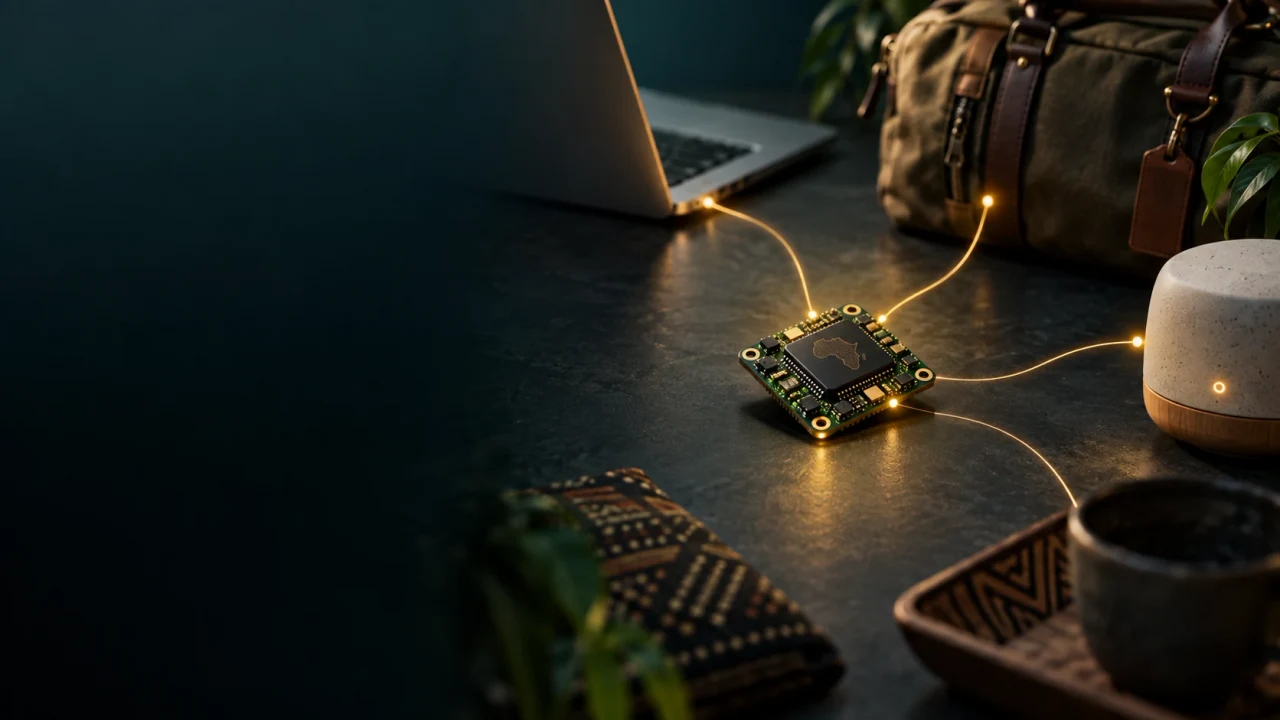
The Matrix Blackbox was conceived, developed, and assembled in Kenya as a small hardware tracker for physical assets: laptops first, then the wider world of bags, equipment, vehicles, and the things people do not want to lose. I imagined an owner being able to ask an object for a useful update rather than living with total uncertainty. That was the seed of a larger platform vision: health, transport, smart homes, and other life domains connected by meaningful observations.
THE QUESTION THAT REMAINED
Connection only matters when it is useful to a person.
The future I cared about was not a room full of gadgets talking for the sake of it. It was a system that could help people notice, remember, and act with more care. That is why this old Matrix Blackbox idea still belongs in the Vitalog story. The technology changes. The question does not: how can we use connected things to make human life easier to understand and better to protect?
DISCUSSION
Join the conversation.
Share a thoughtful take. Comments appear after moderation; email addresses stay private.
Be the first to share your perspective.