
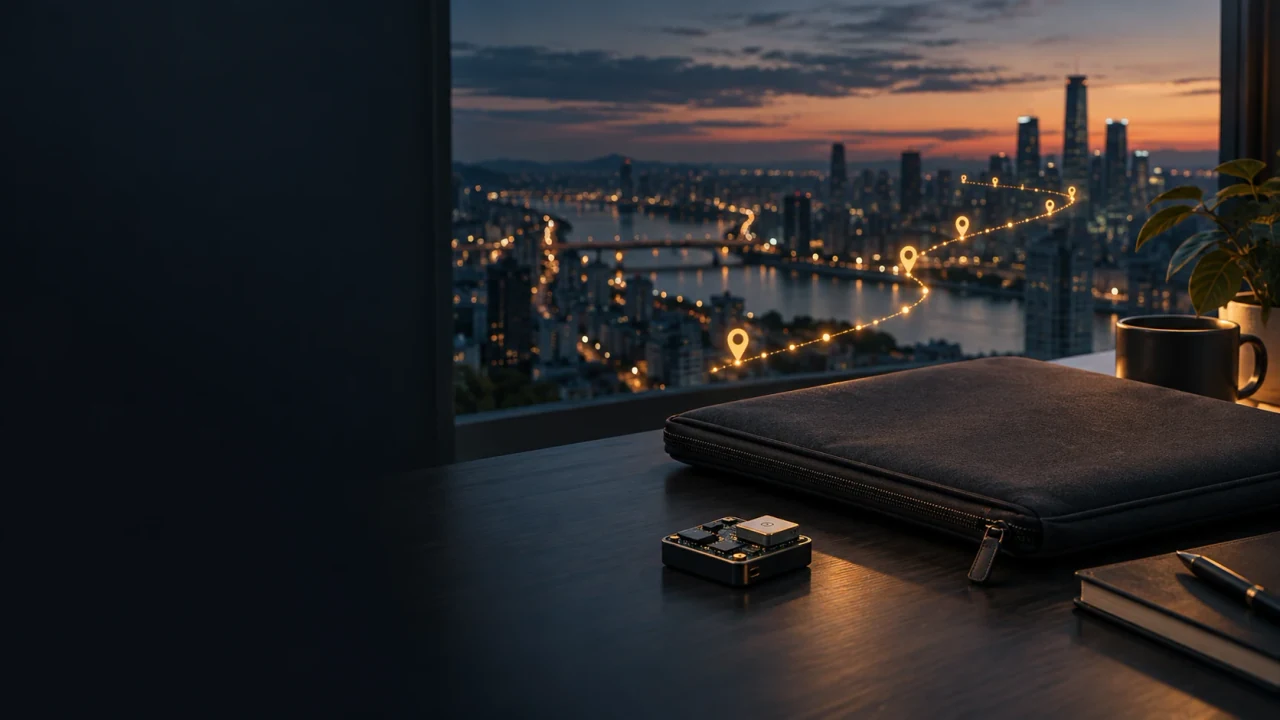
MATRIX BLACKBOX / ARCHIVE
Location needs context.
An early Matrix Blackbox field note on location context, limitations, and a safer approach to recovering a missing device.
Archive artwork · Matrix Blackbox field notes
THE FIRST MOMENT
Take a breath. You have got this.
If you are reading this, one of two things has probably happened. You have lost a laptop and only now understand the value of having a tracker on something important. Or you are one of the few people who decided to prepare before that day comes. Either way, welcome. This was part of my original series on how I imagined recovering a lost laptop step by step, like a patient detective. Before anything else, record the make, model, serial number, and identifying details of the device. Secure your accounts. Then use any location information responsibly, with the people authorised to help you. A laptop is not worth putting yourself in danger for.
THE FIRST FIX
The first job was to get a location.
In the Matrix Blackbox concept, a tracker with its own SIM card could be asked for a location by text or through an online platform. The response was a starting point: a map link, a rough place, a first clue. My old advice was to look around that location for landmarks and repeat the observation over time. One point can be misleading; a small trail of points can tell a more useful story. Is the device moving? Does it keep returning to the same area? Is there a pattern worth sharing with the relevant authorities or property security?
THE STORY IN MOVEMENT
A route can reveal more than a single pin.
The online platform was meant to show a device together with related information, including a route report. I was interested in the places where movement seemed to settle, because that is where an owner might gain enough context to make a careful report rather than chase a signal blindly. That distinction mattered to me. The goal was never just to see a point on a map. It was to gather enough context to understand what might have changed, when it changed, and what a sensible next step could be.
THE PART THAT STAYS HARD
A location is not the whole answer.
A device can be inside a tall building. Network coverage can be weak. GPS and mobile data can place an object within a broad area rather than a particular door. An IP address can be even less specific. These limits were exactly why I kept thinking beyond a basic location response. The next questions became: how can a system add more useful context without pretending to know too much? How can it help an owner work with professionals and make a safer, better informed decision? Those questions led into the Wi-Fi story that followed.
DISCUSSION
Join the conversation.
Share a thoughtful take. Comments appear after moderation; email addresses stay private.
Be the first to share your perspective.